.
#WeAreSciLMi — Let's Make SciLMi a Sustainable Success Story
Hub Scale-Up Event on 28 May 2026
ONLINE
Create your own programme.
FREE
Erasmus+ Teacher Academies Info Booths
Networking Opportunities • Poster Presentations
SciLMi Continued | Implications for a SciLMified Education
All listed times are in Central European Time.
Morning Sessions
09:30 - 10:15
Meta-Scientific Literacies | Empowering the Future Generation
In the opening note, we will kick off the day with an introduction to the platform and a short overview of our project's approach and success story.
Talk
10:30 - 11:00
Beyond SciLMi | Guidelines on Tackling Disinformation
by Dr. Kari Kivinen
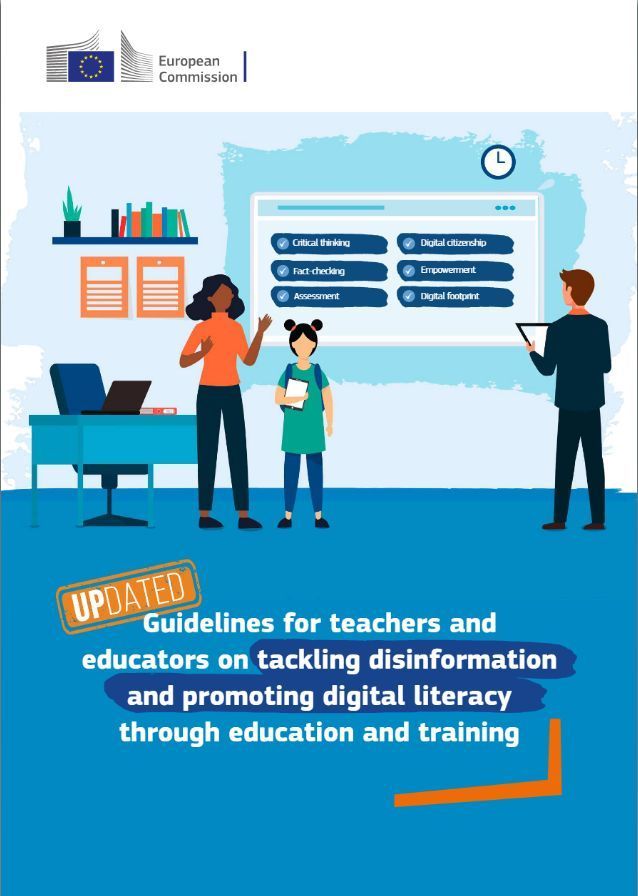
In the first keynote, Kari will introduce the updated version of the European Commission's
Guidelines for teachers and educators on tackling disinformation and promoting digital literacy through education and training.
Keynote
Address
11:15 - 11:45
SciLMi in Action | Blended Intensive Programme (Pre-Service Teachers)
In this panel, facilitators and participants from the SciLMi Blended Intensive Programme will share their experiences of exploring meta-scientific literacies in international pre-service teacher education. Together, we will look at the course design, the learning journey, and the participants’ perspectives.
Panel
12:00 - 12:30
SciLMi Implications | Teacher Education (ITE & CPD)
In two parallel sessions we will explore what can be learnt from the evaluation of the SciLMi pilot courses. Both sessions focus on the relevance of meta-scientific literacies for teacher education, but from different perspectives: one looks at initial teacher education, while the other focuses on continuing professional development for practising teachers.
SciLMi Implications for Initial Teacher Education
In this session, we will discuss what the SciLMi course evaluation suggests about the role of meta-scientific literacies in initial teacher education. We will reflect on how pre-service teachers engaged with the framework, how it supported their understanding of complex socio-scientific issues, and what this may mean for future teacher education programmes.
SciLMi Implications for Teacher Professional Development
In this session, we will explore what the SciLMi teacher training evaluation reveals about the relevance of meta-scientific literacies for continuing professional development. We will consider how practising teachers responded to the approach, how they connected it to their subjects and classroom realities, and what this implies for future professional learning opportunities.
Parallel
Talks
SciLMi Continued | Implications for SciLMified Teaching
All listed times are in Central European Time (CET).
Afternoon Sessions
14:00 - 14:45
Meta-Scientific Literacies | Good Practices Across Subjects
by Prof. Dr. Jonathan Osborne
Jonathan's presentation will make the case for the significance of meta-scientific literacies and pivotal skills such as lateral reading, critical ignoring, and epistemic humility, followed by a brief Q&A session.
Keynote
Address
15:00 - 15:45
SciLMi in Action | Blended Intensive Teacher Trainings
This session presents the three SciLMi pilot teacher trainings on Critical Thinking, Digital Media & Information Literacies, and Inclusion. After a short introduction to the training concepts and implementation, facilitators and participants from all three courses will join a moderated panel discussion to reflect on their experiences, key insights, and what the pilots suggest for bringing meta-scientific literacies into everyday school realities.
Panel Discussion
16:00 - 17:00
SciLMi Continued | KA1 & KA2 Synergy & Sustainability Loop
This spotlight looks ahead to the future of SciLMi beyond the project period. We will outline how KA1 and KA2 activities can create a sustainability loop that keeps SciLMi alive in teacher education and classroom practice.
Showcase